Population genetics of Culex tarsalis
1. ADMIXTURE and PCA
The ADMIXTURE analysis indicated a strong signature of population structure among the collected samples, with the optimal number of population assignments occurring at K=4 (Figure 2C). The genetic clusters corresponded to four different broad geographic regions: (1) California/the West Coast, (2) the Southwest, (3) the Northwest, and (4) the Midwest (Figure 1).
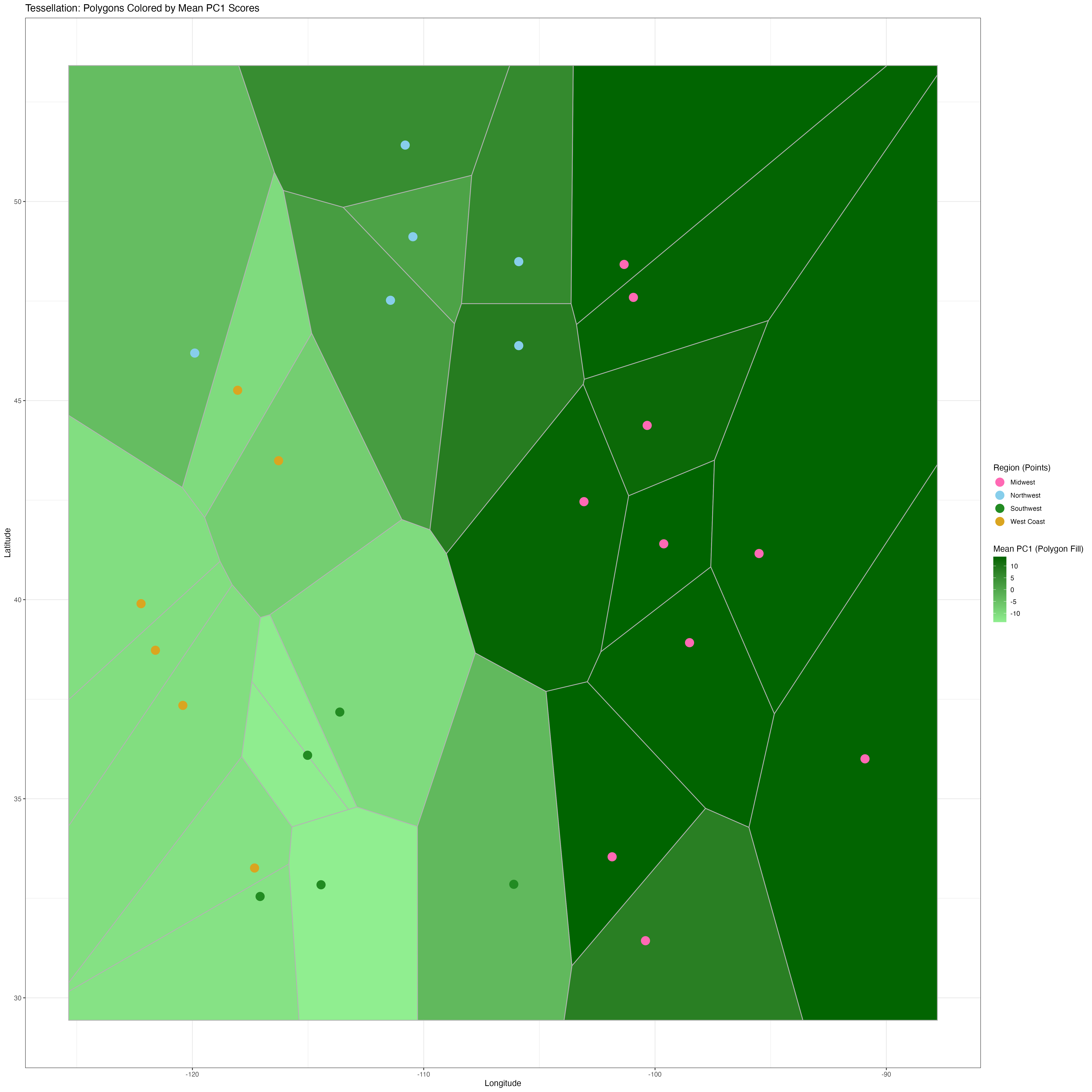
The PCA results confirmed this pattern, while also showing evidence of some sub-structure among the West Coast and Northwest populations (Figure 2C). Voronoi Tessellation Plot (Figure 3) also Reveals a East-West Spatial Genetic Gradient.
2. Analysis of MOlecular VAriance (AMOVA)
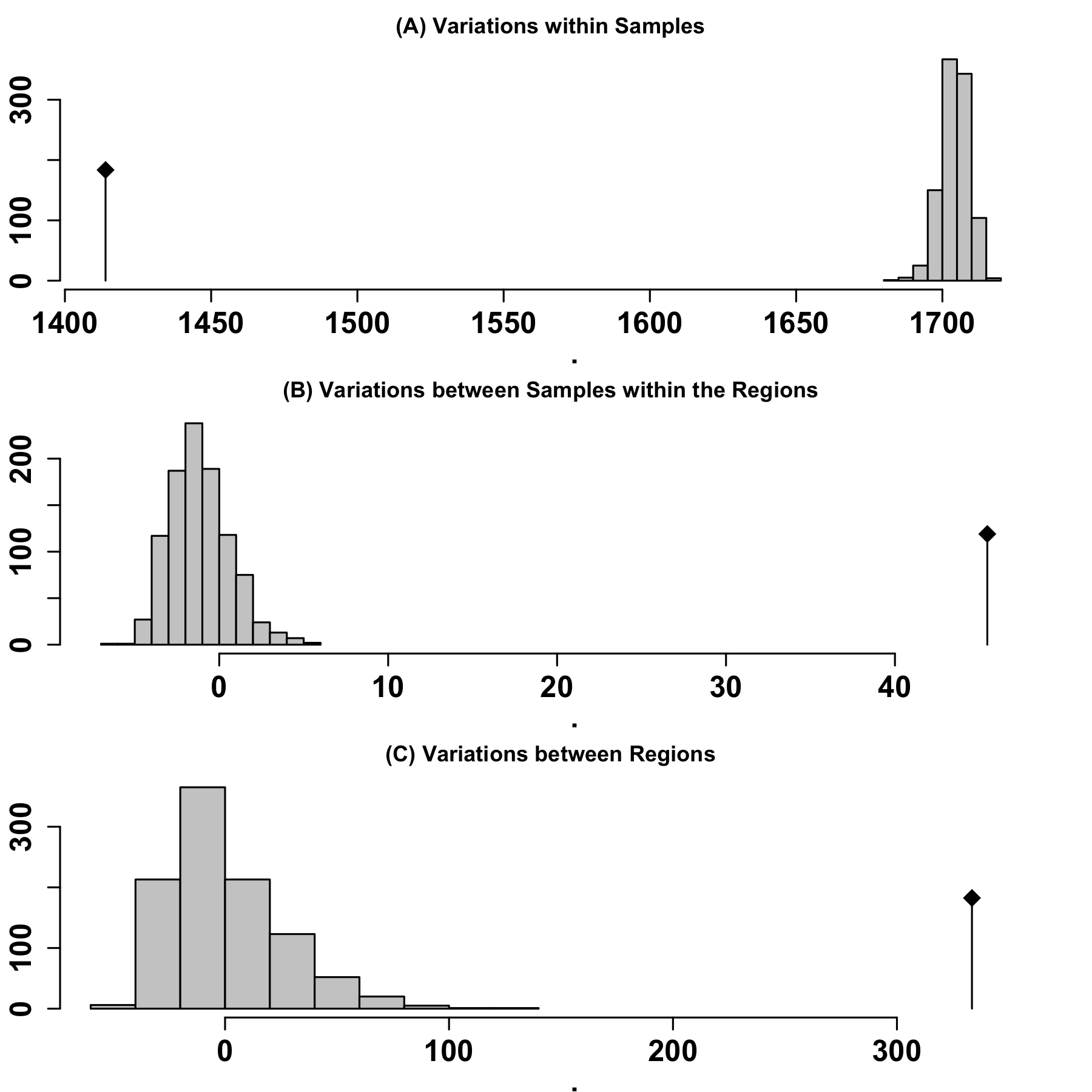
An Analysis of MOlecular VAriance (AMOVA) was performed using the poppr package's poppr.amova() function in R to detect population differentiation among regions inferred from ADMIXTURE results. To assess whether there was a statistically significant level of population structure, a randomization test was conducted using the randtest() function from the ade4 package in R, employing 999 replicates.
3. Isolation by Distance (IBD) verse Isolation by Environment (IBE)
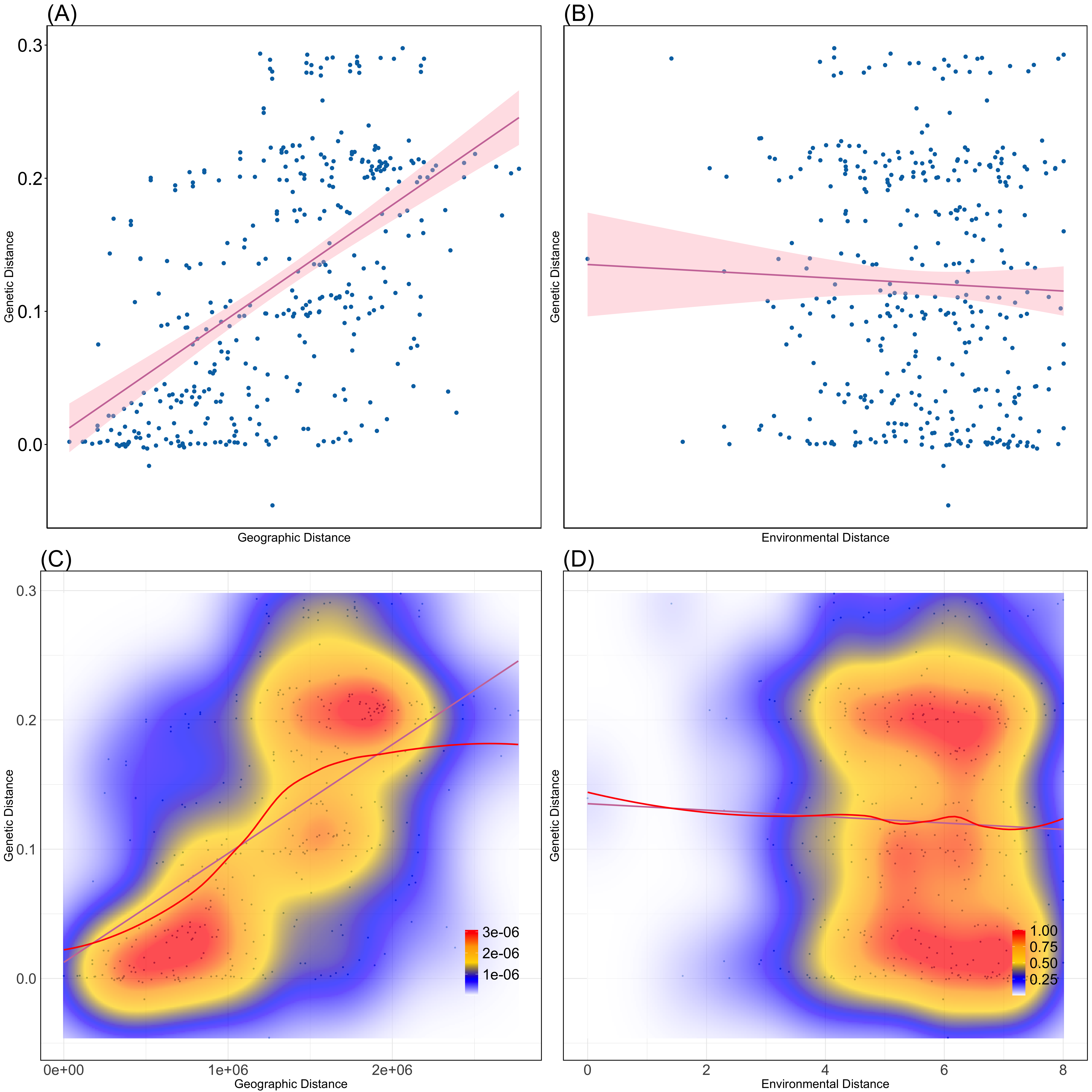
Both geographic distance (IBD) and environmental distance (IBE) were tested for their relationships with genetic distance. The Mantel test revealed a strong and statistically significant correlation between genetic and geographic distances, with a Mantel statistic of 0.5661 (p < 0.001), indicating that geographic distance plays a notable role in genetic differentiation in this system. In contrast, the relationship between genetic and environmental distances was weak and non-significant, with a Mantel statistic of -0.05185 (p = 0.7741).
4. Partial Redundancy Analysis (Partial RDA)
To further investigate the potential role of environmental factors, we performed partial redundancy analysis (partial-RDA) to separate and evaluate the individual contributions of geographic (IBD) and environmental (IBE) factors to genetic differentiation.
| Model | R² (Adjusted) | F-statistic | p-value |
|---|---|---|---|
| Environment (Controlling for Geography) | 0.0309 | 2.36 | 0.001*** |
| Geography (Controlling for Environment) | 0.0134 | 3.32 | 0.001*** |
| Variable | RDA1 | RDA2 | RDA3 | RDA4 | RDA5 | RDA6 |
|---|---|---|---|---|---|---|
| eastward_wind | -0.04295 | 0.6138 | -0.38221 | -0.068225 | 0.2848 | 0.4225 |
| northward_wind | -0.01733 | -0.1283 | -0.60759 | 0.469732 | -0.1585 | -0.2478 |
| temperature | 0.25899 | -0.2221 | -0.03984 | 0.016740 | 0.1733 | -0.1052 |
| high_vegetation | 0.07189 | 0.4416 | 0.11040 | 0.411215 | 0.4095 | -0.3103 |
| low_vegetation | -0.78515 | -0.3226 | 0.03450 | -0.004408 | 0.1817 | -0.2035 |
| water_retention_capacity | -0.50671 | -0.2401 | 0.33451 | 0.665514 | 0.0183 | 0.1856 |
| surface_runoff | -0.37392 | -0.4824 | 0.22363 | 0.196856 | 0.3530 | 0.2560 |
| evaporation | 0.56079 | 0.3324 | -0.01991 | -0.094839 | -0.2216 | 0.1812 |
5. Genotype-Environmental associatioins (GEA) using Redundency Analysis (RDA)
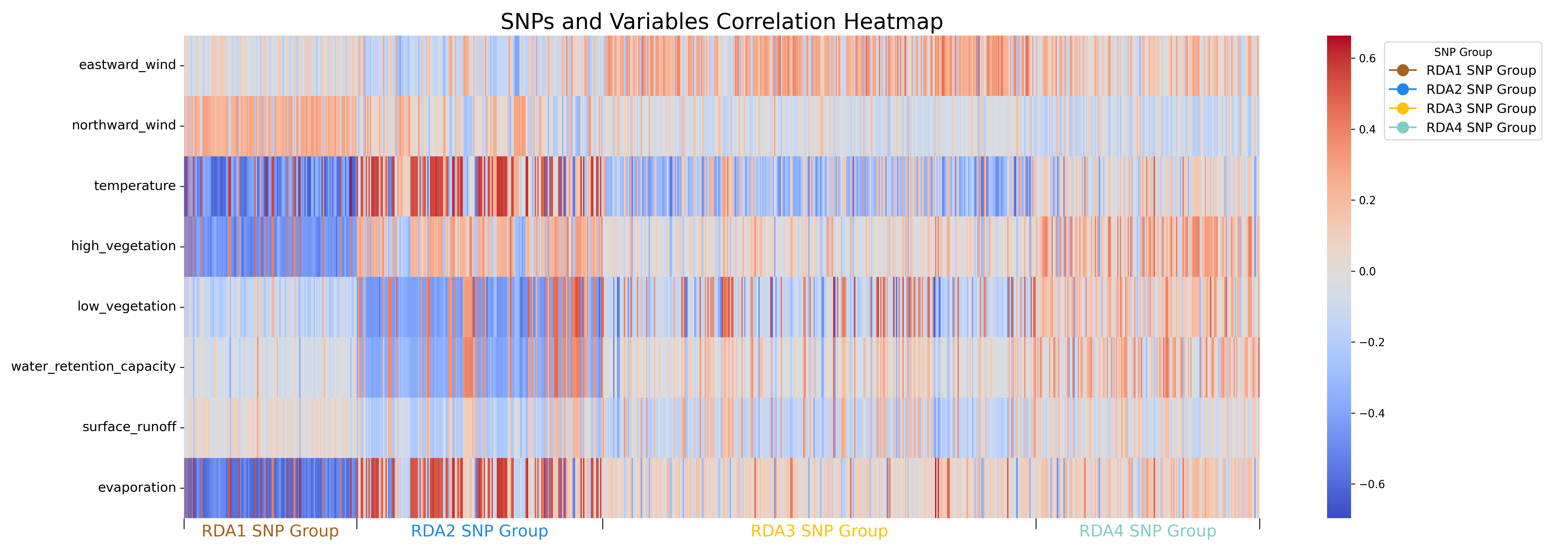
The RDA operates as a multifaceted ordination technique, evaluating multiple loci concurrently with environmental variables. For this analysis, the significance of both the overall RDA model and its individual constrained axes was assessed. This assessment utilized the anova.cca() function from the vegan package in R (Oksanen et al. 2019; Borcard et al.), facilitating a comprehensive examination of the null hypothesis (an absence of a linear relationship between SNP data and environmental variables). To select candidate SNPs for local adaptation, we identified SNPs that significantly deviated from the mean loadings, using a threshold of 3 standard deviations. Statistical significance was determined based on p-values below the threshold of 0.001.
| Df | Variance | Proportion | F | Pr(>F) | Significance | |
|---|---|---|---|---|---|---|
| Full Model | 8 | 1796.3 | 10.42% | 4.5511 | 0.001 | *** |
| RDA1 | 1 | 894.1 | 5.19% | 18.1217 | 0.001 | *** |
| RDA2 | 1 | 469.8 | 2.73% | 9.5231 | 0.001 | *** |
| RDA3 | 1 | 158.7 | 0.92% | 3.2158 | 0.001 | *** |
| RDA4 | 1 | 69.8 | 0.40% | 1.4154 | 0.001 | *** |
| RDA5 | 1 | 56.8 | 0.33% | 1.1517 | 0.094 | . |
| RDA6 | 1 | 51.1 | 0.30% | 1.0361 | 0.591 | |
| RDA7 | 1 | 48.6 | 0.28% | 0.9855 | 0.901 | |
| RDA8 | 1 | 47.3 | 0.27% | 0.9592 | 0.901 | |
| Constrained axis Residual | 313 | 15442.7 |

6. SNPs Under Selection
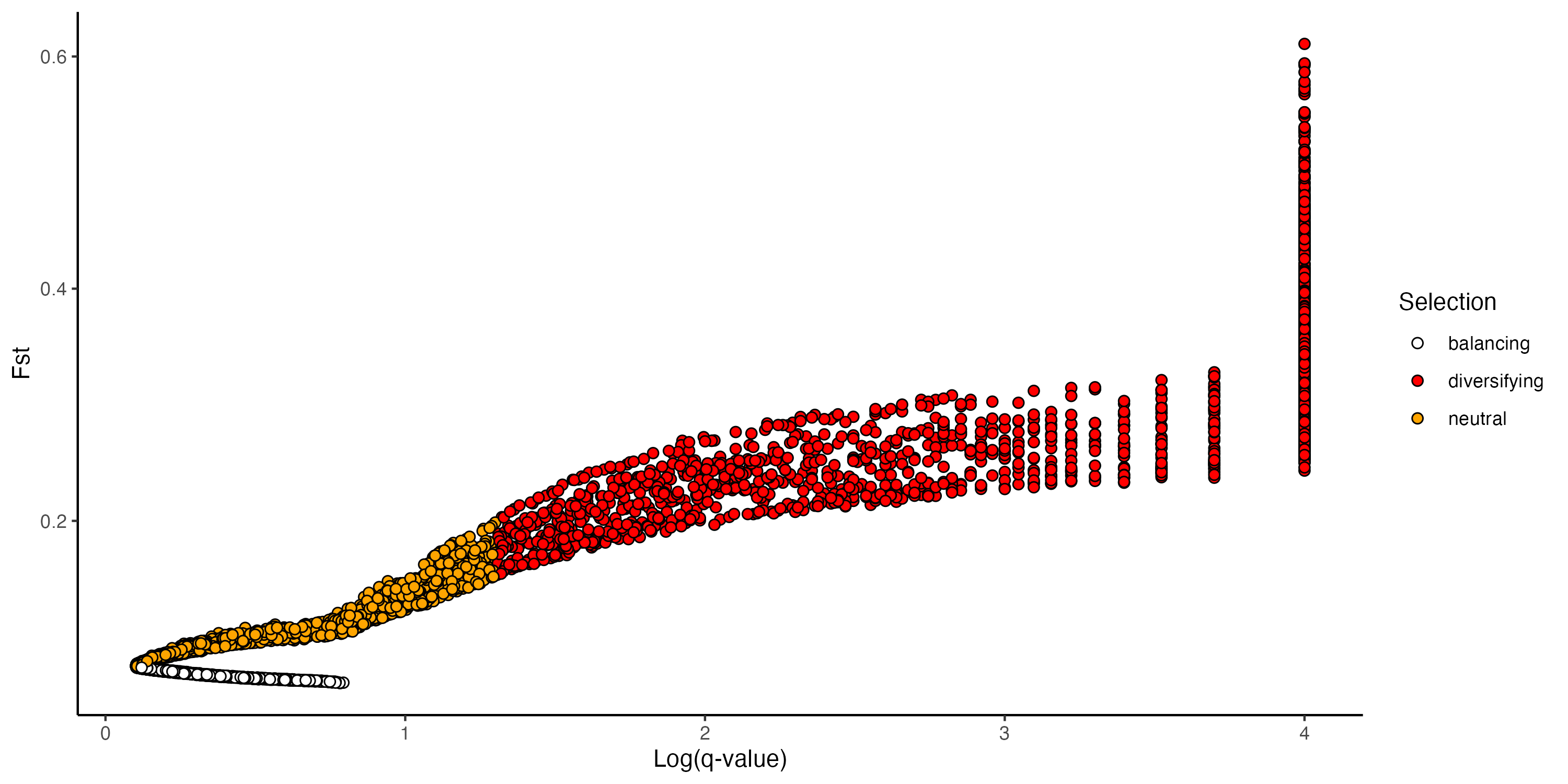
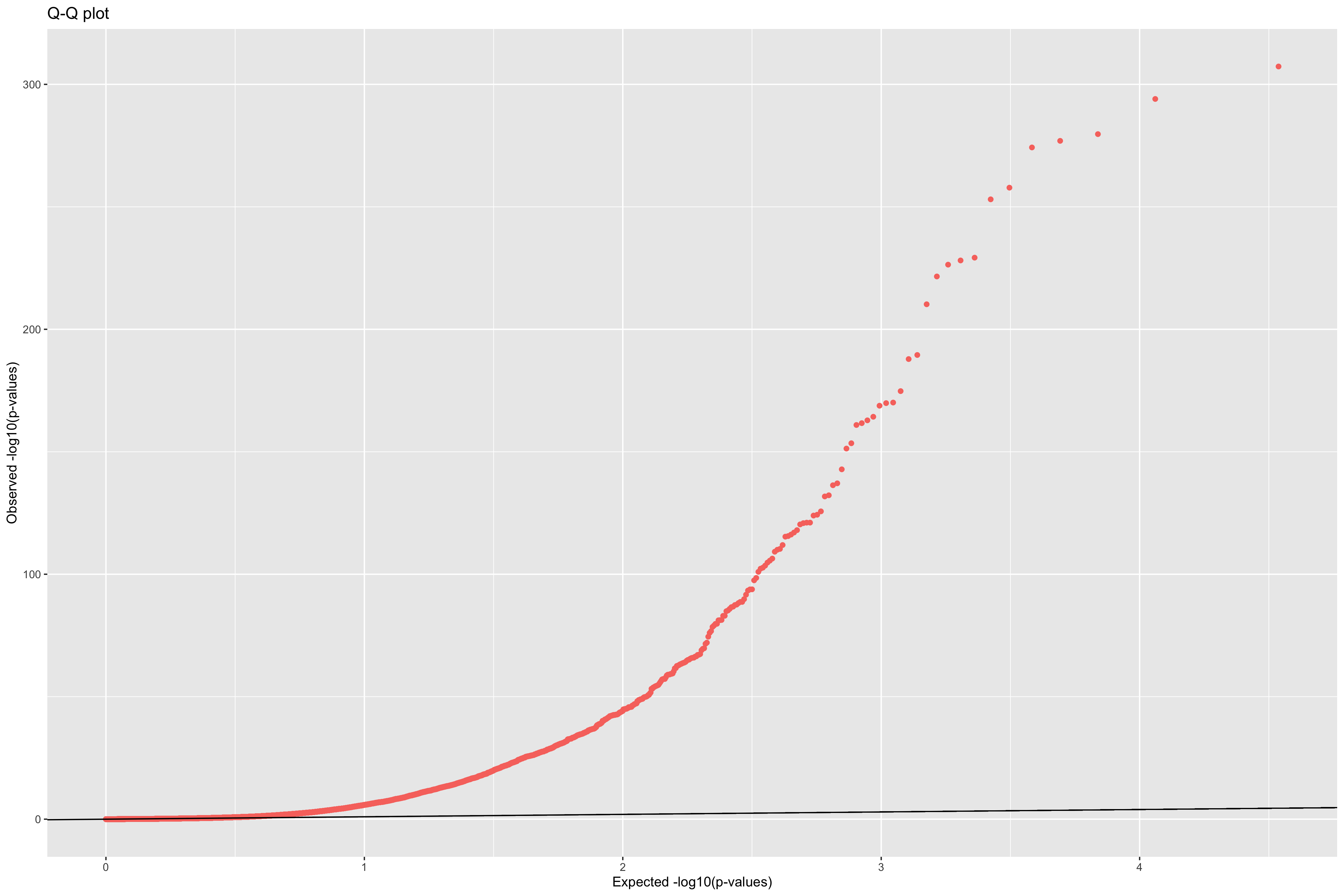
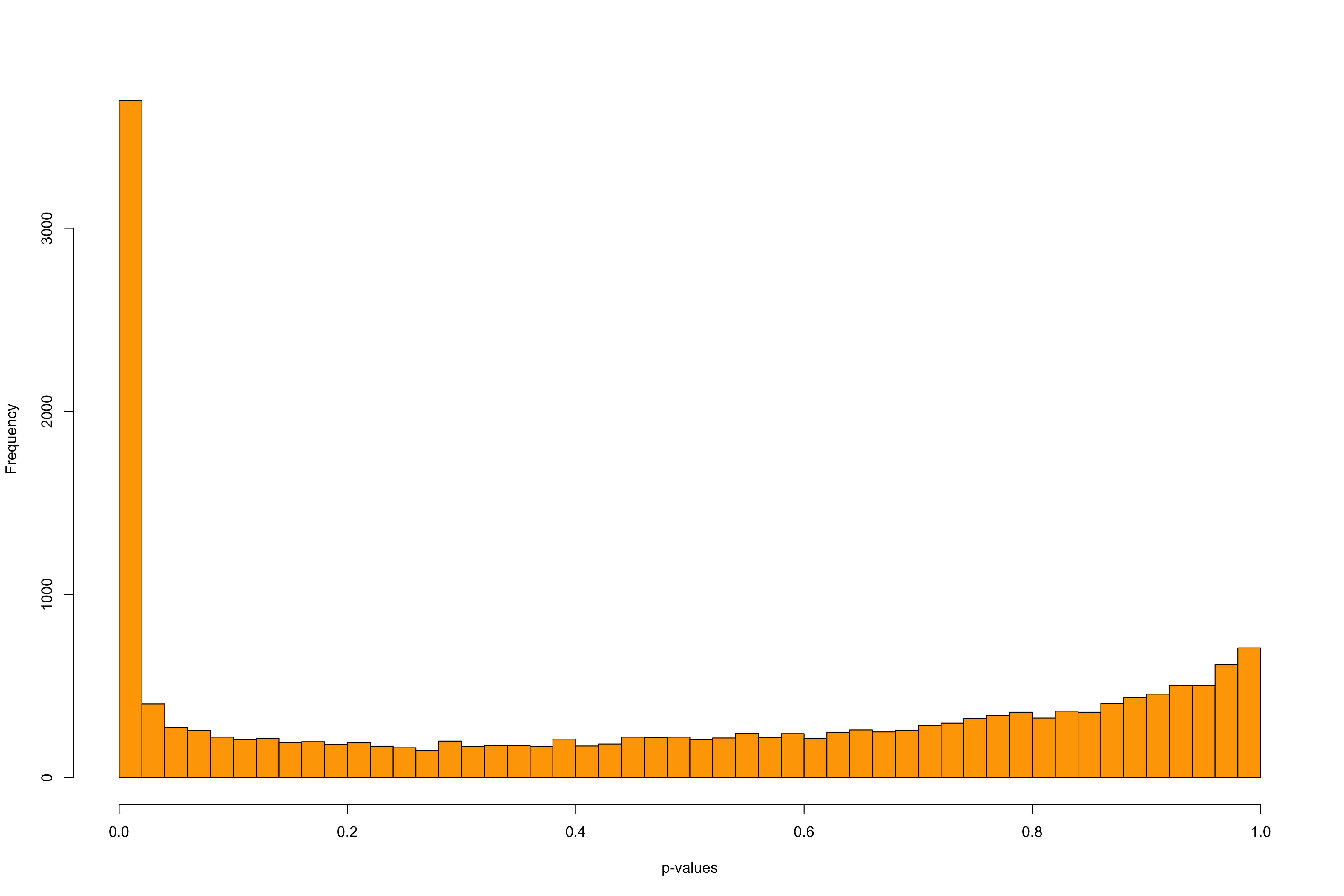
To find which SNPs that were significantly associated with environmental variables also showed signatures of natural selection, we performed a Bayesian selection inference as implemented in BayeScan. We also independently identified outliers using a PCA-based method implemented in the pcadapt R package
7. Overlapping Candidate Adaptive Genes
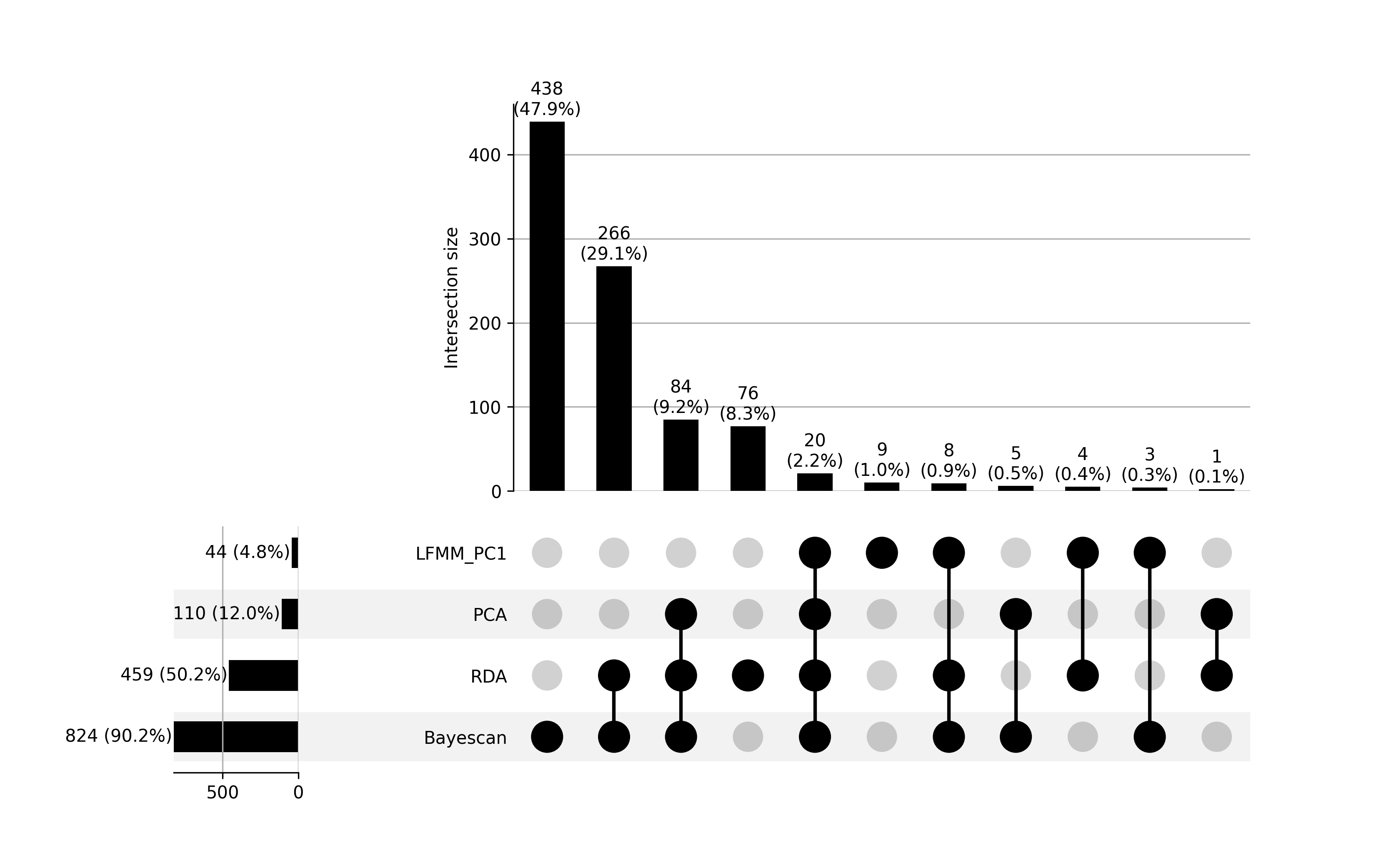
Looking across all four analyses examining significant environmental associations and evidence of natural selection, we identified 20 common genes containing candidate SNPs that were consistently significant in each instance. Given BayeScan’s susceptibility to potential false positives, we included PCAdapt to provide additional validation and strengthen the robustness of our findings.